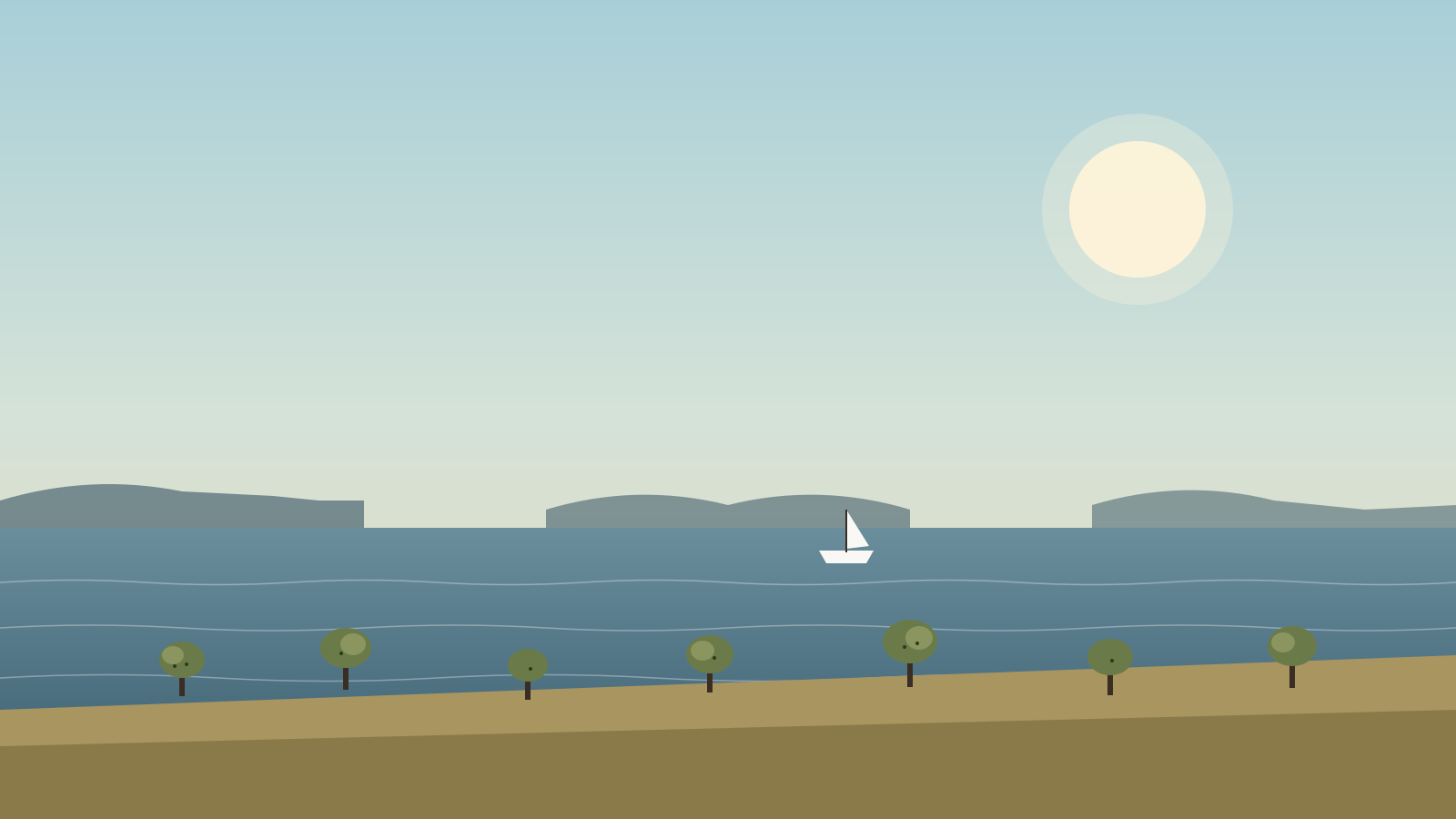
Shodoshima: Olive Groves and Soy Sauce on the Seto Inland Sea
Shodoshima in Kagawa is an island of olive groves, century-old soy sauce breweries, somen noodles, and quiet coastal roads in the middle of the Seto Inland Sea.
Region
Kagawa
Access
1 hour by ferry from Takamatsu
Best Season
April-May and October-November for cycling weather
If the Seto Inland Sea has an outlier, it is Shodoshima. The island is large enough to have its own mountains and its own highway, small enough that you can cycle across it in a long afternoon, and quirky enough that it has grown Mediterranean olives for over a century. Naoshima gets the art crowds; Shodoshima gets people who want olive oil with their udon and soy sauce that has been fermenting since their grandparents were born.
Why this place
Shodoshima sits almost exactly in the middle of the Seto Inland Sea, closer to Honshu than to Shikoku despite being administratively part of Kagawa. Its south coast is a string of small harbour towns, dense with old wooden warehouses where soy sauce and tsukudani (soy-simmered seafood) have been made for generations. Its interior is mountainous and pine-forested, cut by the dramatic Kankakei gorge. And along one sunny slope near Nishimura, the first olive trees planted in Japan took root in 1908 and never left.
The combination is unusual: a Japanese rural island that smells faintly of olives and soy sauce, with Mediterranean light bouncing off whitewashed walls in one valley and traditional village matsuri drums echoing in the next.
Getting there
Shodoshima has no bridge; the only way in is by ferry.
- From Takamatsu (Kagawa): Ferries from Takamatsu Port to Tonosho, Ikeda, or Kusakabe run roughly once an hour during daylight. Crossings take 60 to 70 minutes and cost around 700 yen for foot passengers. High-speed boats are faster (around 35 minutes) but a little more expensive.
- From Himeji (Hyogo): Ferries to Fukuda run roughly every two hours, 1 hour 40 minutes, around 1,600 yen.
- From Okayama (Shin-Okayama Port): Ferries to Tonosho run several times a day, about 70 minutes, around 1,200 yen.
To reach Takamatsu itself from Tokyo, fly to Takamatsu Airport (around 1 hour 20 minutes), or take the Tokaido/Sanyo Shinkansen to Okayama and transfer to the Marine Liner to Takamatsu (around 4.5 hours total from Tokyo).
On the island, buses connect the main towns, but they are infrequent. A rental car or electric bicycle is a much better way to get around.
What to see
Kankakei Gorge
One of Japan’s celebrated three gorges, Kankakei cuts through the island’s volcanic interior in a series of ochre and grey cliffs. A ropeway climbs from the valley floor to a viewpoint at the top; in late November the autumn colour against the bare rock is particularly fine. Hiking trails connect the upper and lower stations if you prefer to walk down.
Olive Park and the windmill
On a south-facing slope above the coast, the Olive Park is a working grove, a museum of the island’s olive history, and, oddly, home to a white Greek-style windmill that has become the island’s most photographed landmark. The park also has an herb garden, a spa, and a small olive oil tasting room.
Shoyu no Sato, the soy sauce district
Around the town of Marukin and along the coast toward Umaki, more than twenty traditional soy sauce breweries and tsukudani makers line the road. Several open their cedar-barrel warehouses to visitors, and you can walk between them in an afternoon, nose leading the way. It is one of the most concentrated surviving clusters of traditional shoyu brewing in the country.
Angel Road
A narrow sandbar between the main island and four tiny offshore islets that appears only at low tide, letting you walk out across the sea and back. The name is tourist-board branding, but the place is genuinely lovely, especially in late afternoon when the tide is just turning.
Nakayama rice terraces
In the island’s interior, a quiet valley of tiered rice paddies backed by a small shrine and an outdoor kabuki stage that has been in use since the Edo period. In July the terraces are flooded and mirror the sky; in September they are yellow with ripening rice.
Things to do
- Cycle the south coast. An electric rental bike from near the ferry terminals lets you cover the soy sauce district, Olive Park, and Angel Road in a single day without exhausting yourself on the hills.
- Taste soy sauce. Several breweries offer free or low-cost tours and sell tiny bottles of their flagship kioke (wooden barrel) shoyu. A drop on warm rice is a lesson in itself.
- Try hand-pulled somen. In winter, a few workshops let visitors try stretching the thin wheat noodles Shodoshima is famous for.
- Visit the monkey park. On a hilltop overlooking the Inland Sea, a wild monkey troop comes down to be fed; informative and a little chaotic.
- Take an olive oil tasting. Several small producers near Olive Park do serious flights of their cold-pressed oils, often paired with local salt and bread.
Where to eat
Shodoshima eats very well for an island of its size.
- Shoyu soft-serve, made with local soy sauce drizzled into vanilla ice cream, sold at several of the breweries. Sounds odd, works surprisingly well.
- Hand-pulled somen, served cold in summer with a light dipping sauce, or hot in winter as nyumen in broth. Look for small shops in the central and eastern parts of the island.
- Olive hamachi and olive beef. Local yellowtail and cattle fed partly on olive leaves are a Shodoshima speciality; several coastal restaurants serve them in set lunches.
- Tsukudani bought from the small shops along Shoyu no Sato, to take home or eat on rice at your lodging. The small shrimp and kelp versions are the classics.
An afternoon of soy sauce warehouses and an evening of olive oil with sashimi is an almost absurdly specific thing to do, which is exactly why it is worth doing.
Where to stay
- Beach and harbour hotels in Tonosho, Ikeda, and along the southern coast: 10,000 to 18,000 yen per person, often with sea views and a buffet dinner that leans heavily on the day’s catch.
- Small ryokan and minshuku in the olive and soy sauce districts: 9,000 to 15,000 yen per person with two meals.
- Self-contained cottages and farm stays on the island’s interior slopes: 12,000 to 20,000 yen per cottage, good for families.
Tonosho, on the western end, is the busiest port and has the best ferry connections. Sakate and Kusakabe, on the south coast, put you closer to the soy sauce district and a short cycle from Angel Road.
Practical tips
- Best season: April and May for wildflowers and mild cycling weather; late October and November for autumn colour in Kankakei. Summer is hot and the island gets busier during the Setouchi Triennale art festival (held in parts every three years).
- How many days: Two nights lets you cover the island properly without rushing.
- Cash vs card: Main hotels and larger restaurants accept cards. Small shoyu breweries, rural cafes, and local buses are cash only.
- Language: Limited English, though the olive and soy sauce shops are used to curious visitors and often have printed menus in English.
- Etiquette: In the soy sauce warehouses, keep your hands off the barrels, and do not use flash photography near the fermentation vats. When driving, watch for wild monkeys on mountain roads at dusk.