Sakura, Chiba: An Edo Castle Town an Hour from Tokyo
Sakura in Chiba is a quiet former castle town with a samurai district, Japan's national history museum, and Edo-era lanes, all an hour from central Tokyo.
Region
Chiba
Access
60 min from Tokyo
Best Season
Spring for cherry blossoms and tulips, autumn for castle park colours
Chiba, for most visitors, is the prefecture you pass through on the way to Narita Airport. It deserves more than that. An hour from Ueno, on a quiet branch of the Keisei line, the old castle town of Sakura keeps an Edo-era street plan, a preserved samurai district, and one of the most serious history museums in the country. On a good weekday in spring, you might share the samurai district with a handful of retirees and a school group, and not much else.
Why this place
Sakura was the seat of the Hotta clan, one of the most influential domains in the late Edo period. The castle is gone, but its earthworks and moats are intact, now a public park. The streets below still follow the original castle-town layout: merchant quarters along the main road, temples on the ridges, and a row of samurai houses on a quiet lane at the edge of a wooded valley.
The town has none of the performative tourism of Kawagoe or the coach-park chaos of Nikko. There are no rickshaw men in costume. You walk between low wooden gates, past old hedges, and, if you stop to read the information boards, you realise the street you are on has looked almost the same for two hundred years.
Getting there
The fastest route from central Tokyo is the Keisei Main Line. From Keisei Ueno or Nippori, take a Keisei limited express (tokkyu) toward Narita or Keisei Sakura; the trip is around 60 minutes for roughly 700 to 900 yen. Get off at Keisei Sakura station for the samurai district and castle park.
Alternatively, JR Sobu Line rapid services from Tokyo Station reach JR Sakura in about 65 to 75 minutes for around 1,000 yen. JR Sakura and Keisei Sakura are about fifteen minutes apart on foot, with most of the old town in between.
For the National Museum of Japanese History, Keisei Sakura is the closer station; the museum sits inside the castle park, about a fifteen-minute uphill walk.
What to see
Bukeyashiki (Samurai District)
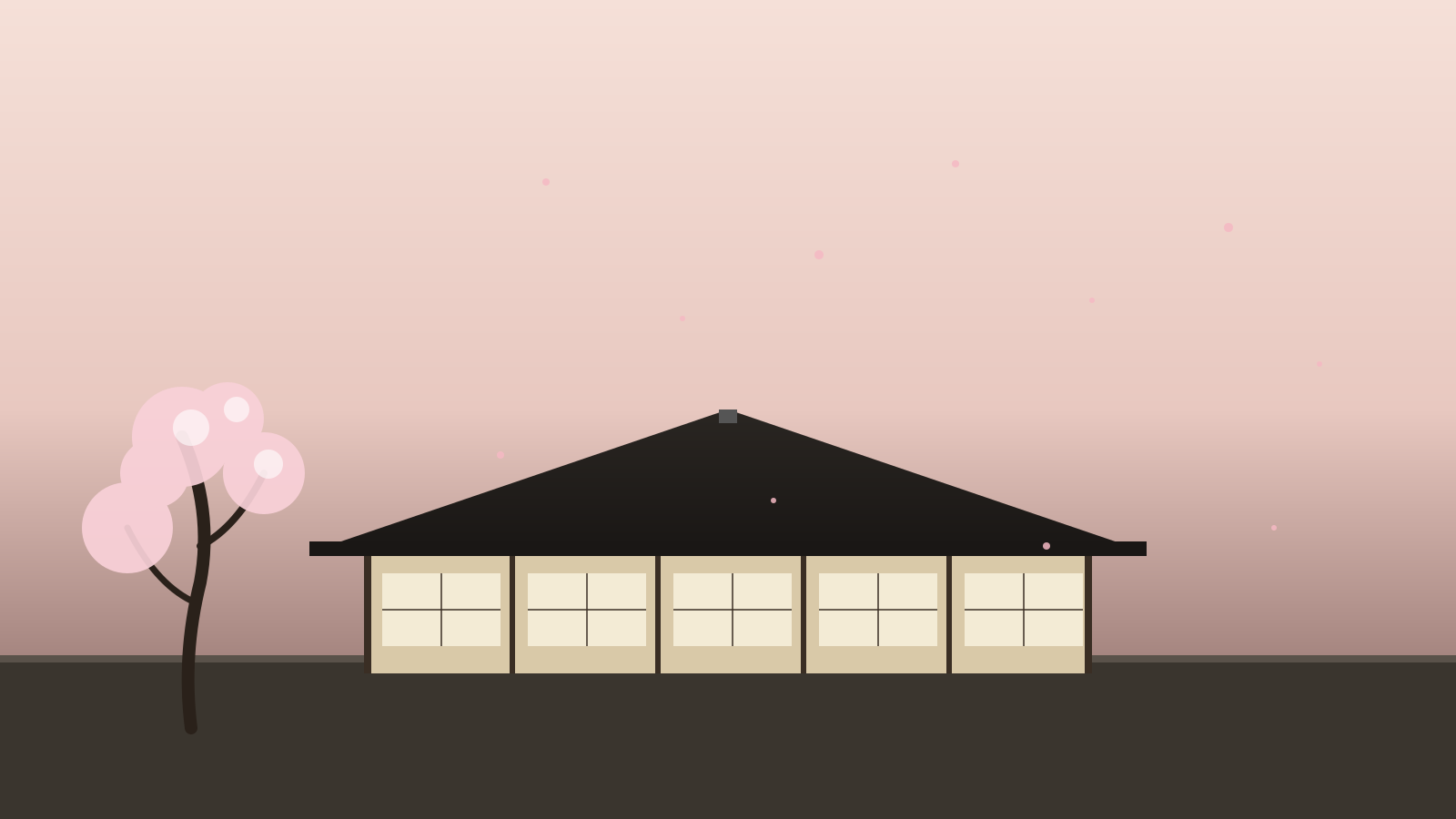
On a quiet lane called Hiyodorizaka you will find three surviving samurai residences, preserved and open to the public as a single ticketed site. Each represents a different rank of retainer, from the relatively modest to the imposing. The gardens, the thatched roofs, and the shaded approach along a bamboo-lined slope are the reason many people come to Sakura.
National Museum of Japanese History (Rekihaku)
Set inside the old castle grounds, Rekihaku is the country’s flagship museum of Japanese history and folk culture. It is enormous, thoughtfully curated, and surprisingly quiet on weekdays. Allow at least three hours. English signage is limited but improving; an audio guide is available.
Sakura Castle Park
The castle itself was dismantled in the Meiji era, but the massive earth ramparts, dry moats, and stone foundations remain, draped in old cherry trees. In early April the park is one of the best hanami spots in Chiba that still does not feel crowded.
Kyu-Hotta Residence and Sakura Garden
A short walk from the samurai district, the former Hotta family residence is a rare surviving example of a daimyo’s late-Edo home, with a strolling garden attached. The tea pavilion at the back of the garden is a good place to sit.
Kanayama Inari and old merchant street
The road connecting the two stations passes through the old merchant quarter, with a scattering of sake shops, miso makers, and a small, bright-red fox shrine tucked between them.
Things to do
- Walk the old town loop. A half-day loop connects the two stations via the merchant street, the samurai houses, Kyu-Hotta, and the castle park. It is roughly five kilometres, mostly flat.
- Tulip festival in spring. The nearby Sakura Furusato Square, on the banks of Lake Inba, holds a tulip festival in early to mid-April with hundreds of thousands of bulbs and Dutch-style windmills. It pairs oddly but happily with the samurai lanes.
- Cycle Lake Inba. Rental bikes are available near the lakeside. A flat loop of about twenty kilometres circles part of the lake.
- Time travel lightly. The tourist information centre at Keisei Sakura rents simple samurai-era costumes by the hour if you want to take pictures in the old district without it feeling theme-park.
Where to eat
Sakura’s food is unfussy, inland Chiba country cooking.
- Soba, hand-cut, served in old machiya-style houses along the merchant street. Several shops mill their own buckwheat.
- Peanut dishes. Chiba is Japan’s peanut capital; look for peanut miso, peanut tofu, and peanut-based sweets in shops along the main road.
- Unagi (freshwater eel), a Chiba classic grilled over charcoal and served on rice. A few long-standing specialists cluster near the old town centre.
- Sake tasting. A local brewery within walking distance of Keisei Sakura opens its tasting room on weekends; they make a crisp, dry sake using rice from the surrounding plain.
Sakura rewards the slow traveller: the real attraction is the walk between things, not the things themselves.
Where to stay
Most visitors treat Sakura as a day trip, which is fair. If you want to stay over, your options are mostly modern.
- Business hotels around Keisei Sakura and JR Sakura stations: 7,000 to 11,000 yen per room per night.
- A handful of small guesthouses and minshuku near Lake Inba: 6,000 to 9,000 yen per person, sometimes with breakfast.
- Resort-style hotels by the lake for families: 12,000 to 18,000 yen.
If you have one night, stay near Keisei Sakura for easy access to the old town in the morning light, when the samurai lane is almost empty.
Practical tips
- Best season: Late March to mid-April for cherry blossoms in the castle park and tulips at the lake, or early November for autumn colour.
- How many days: A half-day is enough to see the main sights; a full day lets you add Rekihaku properly.
- Cash vs card: Museums and larger restaurants accept cards; the samurai houses and smaller soba shops are cash-only.
- Language: Limited English, but the main sights have bilingual signage.
- Etiquette: In the samurai houses you will be asked to remove your shoes; wear socks without holes. Photography inside Rekihaku is restricted in parts; look for the signs.