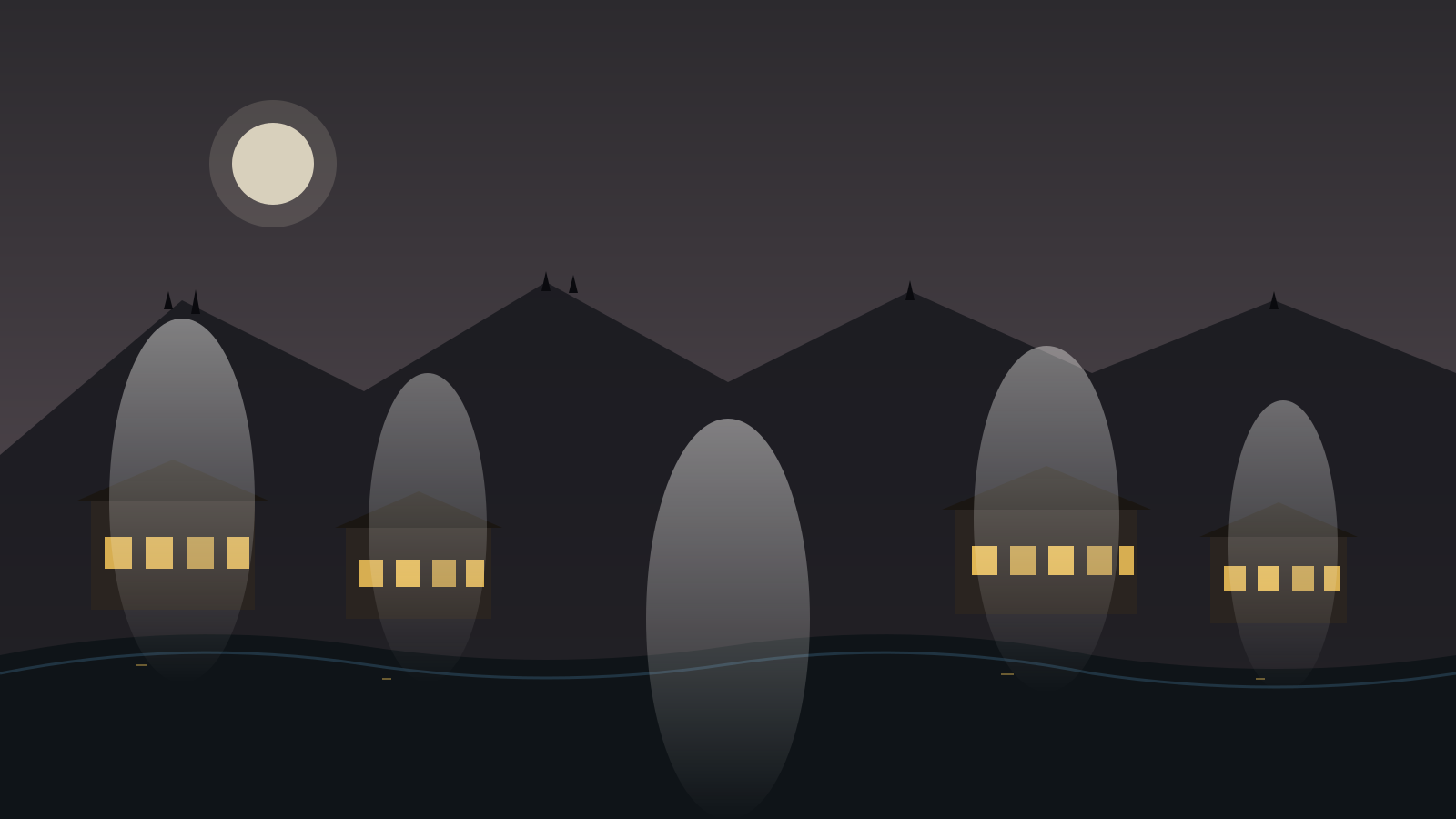
Kurokawa Onsen: A Ryokan Village in the Aso Mountains
Kurokawa Onsen in Kumamoto is a strictly preserved ryokan village in the Aso caldera, where 24 inns share a quiet, lantern-lit valley and a single bathhouse pass.
Region
Kumamoto
Access
3 hours by bus from Fukuoka or Kumamoto
Best Season
Autumn for foliage, winter for snow-dusted baths
Tucked into a narrow, wooded valley in the highlands between Mount Aso and the border of Oita, Kurokawa Onsen is often held up as the quietest, most carefully preserved hot spring village in Japan. That reputation is earned. There are no tall buildings, no neon, and no convenience stores on the main street. Power lines are buried. Vending machines are hidden. A self-imposed aesthetic code, agreed among the innkeepers decades ago, keeps the village looking like a single, continuous ryokan spread across both banks of the Tanoharu River.
Why this place
Twenty-four ryokan, a handful of small cafes and shops, a few public baths, and a river that runs through the middle of everything. That is Kurokawa. The town’s philosophy is that the whole village, rather than any single inn, is the resort. Guests are encouraged to wander in yukata between baths, eat at their own inn, and treat the lanes as a shared garden.
It takes some effort to get here, which is part of why it stays the way it does. You will not stumble across Kurokawa on a day trip from anywhere.
Getting there
Kurokawa sits about halfway between Fukuoka and Kumamoto, in the mountains east of Aso. There is no train station; almost everyone arrives by bus or car.
- From Fukuoka: The Kyushu Odan bus (Highway Bus) from Hakata Bus Terminal or Tenjin Bus Centre to Kurokawa Onsen takes around 2 hours 30 minutes to 3 hours and costs roughly 3,000 to 3,500 yen one way. Reservations are strongly recommended.
- From Kumamoto: The same Kyushu Odan bus line connects Kumamoto Station and Sakuramachi Bus Terminal to Kurokawa in about 2 hours 30 minutes to 3 hours for a similar fare.
- From Beppu or Yufuin (Oita side): The Kyushu Odan bus also runs from Beppu via Yufuin and Aso to Kurokawa in roughly 3 hours.
- By car: Around 2 hours from Fukuoka, 1 hour 30 minutes from Kumamoto, via the Kyushu Expressway and then winding mountain roads. Some routes around Mount Aso can be affected by volcanic activity or weather closures; check before setting out.
Once in the village, everything is within a 10- to 15-minute walk.
What to see
The village itself
Kurokawa is the sight. Walk the lanes on both sides of the river at dusk, when paper lanterns light up, and you will understand why repeat guests come back year after year. A small wooden footbridge, the Marusuzume-bashi, is one of the most photographed spots in Kyushu after snow.
Jizo-do
A small, quiet hall dedicated to Jizo, the protector deity, stands near the centre of the village. Local legend traces Kurokawa’s history as a hot spring to a wandering traveller who discovered the waters while praying here. It is a two-minute stop, but a meaningful one.
The communal rotenburo (open-air baths)
Several of Kurokawa’s most distinctive open-air baths are attached to individual ryokan but open to day visitors carrying the Yumeguri pass. They range from riverside pools under old cedars to cave baths carved into the hillside. Each one is different.
Mount Aso and the caldera
Kurokawa sits on the rim of the Aso caldera, one of the largest active volcanic calderas in the world. A car or bus trip out to the grasslands and the crater viewpoints (when open) makes a good half-day excursion before or after checking in.
Nabegataki Falls
About 15 minutes by car from Kurokawa, a wide, curtain-like waterfall drops from an overhanging ledge, and a path lets you walk behind it. It is one of the most photogenic spots in the area.
Things to do
The central ritual of Kurokawa is the yumeguri pass, a small round wooden tag, sold at the tourist information centre and at participating ryokan for around 1,500 yen. It lets you enter three of the village’s open-air baths of your choice over six months. Most visitors use all three in an afternoon, walking between them in yukata borrowed from their inn.
Beyond yumeguri:
- Walk the lanes. Each ryokan has a different character. A slow evening stroll is half the reason to come.
- Try a private bath. Many inns rent kashikiri (private family baths) to day visitors for 40- or 50-minute slots if you are not comfortable with communal bathing.
- Hike into the hills. Short forest trails climb above the valley, giving you a view over the rooftops.
- Shop quietly. A few small shops sell locally made soap, wooden crafts, and Aso dairy products.
Where to eat
Most guests eat dinner and breakfast at their ryokan, which is the tradition here and part of what you are paying for. For lunch and snacks between baths:
- Dango-jiru, a Kumamoto country soup with wide, flat wheat dumplings, root vegetables, and miso. Several small shops along the main lane serve it.
- Aso beef, grass-fed on the caldera’s grasslands, is the regional speciality. Look for lunch sets at a handful of counters in the village.
- Ji-dori grilled chicken, from local free-range birds, served skewered or over rice.
- Onsen-steamed eggs and puddings, sold at small counters near the public baths; the pudding shop on the main street is a familiar landmark.
Where to stay
Kurokawa is, fundamentally, a place to stay in a ryokan. Day trips are possible but miss the point.
- Traditional ryokan with two meals: 20,000 to 45,000 yen per person per night for most inns, climbing to 60,000 yen and above for the most historic properties with in-room open-air baths.
- Smaller, family-run ryokan: 15,000 to 22,000 yen per person with meals.
- Simpler minshuku on the edges of the village: occasionally available in the 10,000 to 14,000 yen range, usually with breakfast only.
There are two broad clusters: inns along the river in the central village, which put you closest to the lantern-lit lanes, and inns slightly uphill on the surrounding slopes, which tend to be quieter and have wider views.
Practical tips
- Best season: Late October to late November for autumn foliage, which is genuinely striking here; January and February for the chance of snow on the rooftops. Summer is cool and pleasant at this altitude (around 700 metres).
- How many days: At least one night, ideally two. Day-tripping is legal but you will feel the pull to stay.
- Cash vs card: Ryokan generally take cards. The yumeguri pass, small shops, and some bath entries are cash-only; bring 10,000 to 20,000 yen in small bills.
- Language: Limited English. Bus reservations, in particular, are easier to make online in advance through the Kyushu Bus Network site.
- Etiquette: This is a tattoo-friendlier area than many Japanese hot springs, but policies vary by inn. Always ask when booking. Walking in yukata and geta between baths is expected and charming; running, shouting, or loud phone calls on the lanes is very much not.